Understanding how societies organize the production, distribution, and consumption of goods and services is fundamental to grasping global dynamics. The framework that governs these activities is known as an economic system. But what is meant by economic system, and why is it so important?

Key Takeaways:
- An economic system is the method a society uses to allocate resources and manage production.
- There are several primary types of economic systems, including market, command, and mixed economies.
- Each system has its own strengths and weaknesses, affecting efficiency, equity, and innovation.
- The economic system influences the overall well-being and standard of living within a society.
What is meant by economic system? Understanding the Core Concept
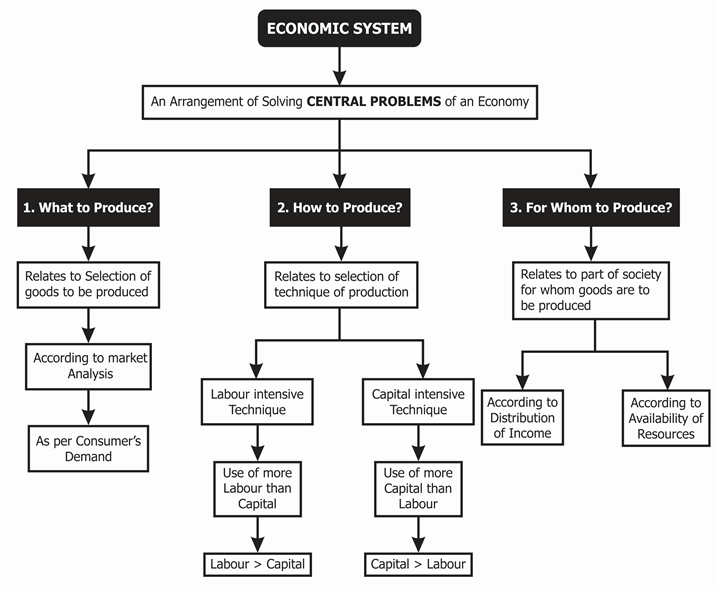
At its most basic, an economic system is the set of rules, practices, and institutions that govern how a society answers the fundamental questions of:
- What goods and services should be produced?
- How should these goods and services be produced?
- For whom should these goods and services be produced?
These questions are universal, but the answers vary greatly depending on the type of economic system in place. Different systems prioritize different values, such as efficiency, equity, freedom, or stability.
Exploring Different Types: What is meant by economic system?
While numerous variations exist, the most widely recognized types of economic systems are:
- Market Economy (Capitalism): In a market economy, resources are primarily allocated through the decentralized decisions of individuals and firms. Prices are determined by supply and demand, and competition plays a crucial role. Private property rights are strongly protected, and the role of the government is typically limited to enforcing contracts and protecting property. The United States, while having aspects of other systems, leans heavily towards a market economy.
- Command Economy (Socialism/Communism): In a command economy, the government owns and controls most of the resources and makes decisions about production and distribution. Central planning is used to determine what goods and services will be produced, how they will be produced, and who will receive them. Examples of predominantly command economies are rare today, though Cuba and North Korea retain significant aspects of this model.
- Mixed Economy: A mixed economy combines elements of both market and command economies. Most modern economies fall into this category. In a mixed economy, some resources are allocated by the market, while others are subject to government regulation or control. The extent of government intervention varies significantly across different mixed economies. For instance, many European nations, including the gb, have robust social safety nets and significant government involvement in healthcare and education, placing them towards the more regulated end of the spectrum.
Evaluating the Strengths and Weaknesses: What is meant by economic system?
Each type of economic system has its own set of advantages and disadvantages:
- Market Economies: Strengths: Tend to be highly efficient in allocating resources, responsive to consumer preferences, and encourage innovation. Weaknesses: Can lead to income inequality, market failures (e.g., pollution), and instability (e.g., economic cycles).
- Command Economies: Strengths: Can achieve rapid industrialization and reduce income inequality (in theory). Weaknesses: Often inefficient, lack innovation, and stifle individual freedom. Central planning struggles to accurately predict consumer needs.
- Mixed Economies: Strengths: Can balance efficiency with equity, provide social safety nets, and correct market failures. Weaknesses: Can be complex, subject to political influence, and prone to regulatory capture.
Impact on Society: What is meant by economic system?
The choice of economic system has a profound impact on society. It affects:
- Standard of Living: The availability of goods and services, healthcare, education, and other factors that contribute to overall well-being.
- Income Distribution: The degree of inequality in the distribution of wealth and income.
- Individual Freedom: The extent to which individuals are free to make their own economic choices.
- Economic Growth: The rate at which the economy is expanding.
Therefore, understanding different economic systems is crucial for informed decision-making about economic policy and for evaluating the performance of different societies.