Have you ever wondered how societies decide who gets what? The answer lies in their economic system – the intricate set of rules, customs, and institutions that govern the production, distribution, and consumption of goods and services. Understanding these systems is crucial to grasping how wealth is created and shared (or not shared) within a nation and across the globe.

Key Takeaways:
- An economic system defines how a society allocates its scarce resources.
- The primary types of economic systems are market, command, mixed, and traditional.
- Each system has strengths and weaknesses in terms of efficiency, equity, and stability.
- Real-world economies often blend elements from different systems.
What is Economic System: Defining the Framework
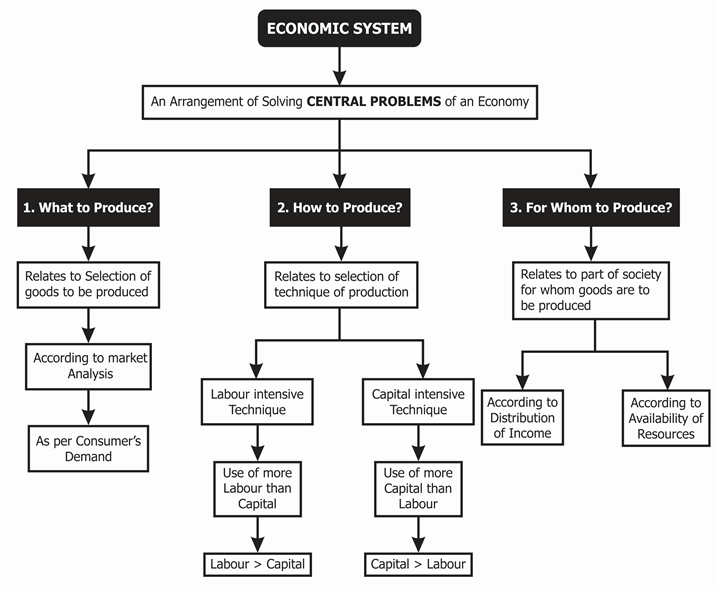
At its core, what is economic system is the organizational structure a society uses to address fundamental economic questions:
- What goods and services should be produced?
- How should these goods and services be produced?
- For whom should these goods and services be produced?
Different societies answer these questions in different ways, leading to diverse economic systems. These systems dictate ownership of resources (land, labor, capital), the role of government intervention, and the mechanisms for coordinating economic activity. From the bustling marketplaces of capitalist societies to the centralized planning of command economies, the economic system shapes every aspect of daily life.
What is Economic System: Exploring the Main Types
Several core types of economic systems exist, each with distinct characteristics:
- Market Economy (Capitalism): In a market economy, private individuals and businesses own the factors of production. Prices are determined by supply and demand, with minimal government intervention. Competition is encouraged, and individuals are free to pursue their own economic interests. Examples include the United States and, to a lesser extent, the United Kingdom. Although, even the UK, a relatively free market, has government regulations and social safety nets.
- Command Economy (Socialism/Communism): In a command economy, the government controls the factors of production and makes decisions about resource allocation. Central planning determines what goods and services are produced, how they are produced, and who receives them. Historically, the Soviet Union and North Korea exemplify command economies, though many have transitioned toward more market-oriented approaches.
- Mixed Economy: A mixed economy combines elements of both market and command economies. There is private ownership of resources, but the government plays a significant role in regulating markets, providing public goods and services, and implementing social welfare programs. Most modern economies, including those in Europe, Canada, and Australia, are mixed economies. The specific balance between government intervention and free markets varies considerably.
- Traditional Economy: Traditional economies rely on customs, traditions, and beliefs to determine economic activity. Production methods are often based on historical practices, and economic roles are typically passed down through generations. These systems are often found in rural, agricultural societies.
What is Economic System: Advantages and Disadvantages
Each economic system has its own set of strengths and weaknesses:
- Market Economy:
- Advantages: Efficiency, innovation, consumer choice, economic growth.
- Disadvantages: Inequality, market failures (e.g., pollution, monopolies), potential for instability.
- Command Economy:
- Advantages: Potential for greater equality, ability to address social needs, stability during times of crisis.
- Disadvantages: Inefficiency, lack of innovation, limited consumer choice, bureaucratic hurdles, potential for corruption.
- Mixed Economy:
- Advantages: Balances efficiency and equity, provides social safety nets, allows for government regulation of markets.
- Disadvantages: Potential for government overreach, bureaucratic inefficiencies, higher taxes.
- Traditional Economy:
- Advantages: Strong community bonds, preservation of cultural heritage, sustainable practices.
- Disadvantages: Limited economic growth, vulnerability to environmental changes, restricted individual freedom.
What is Economic System: Real-World Examples and Variations
While the four main types provide a framework, real-world economies often exhibit unique characteristics and variations. For example, Sweden is known for its robust social welfare system within a market-oriented framework. Singapore is known for its government-led development and strategic interventions in key industries. Even within the countries like the GB, there are regional differences in economic activity and government policies. Understanding these nuances is essential for a more complete picture of global economics.