The Metalworking and fabrication industry forms the backbone of modern manufacturing, producing everything from intricate medical devices to robust aerospace components. My years on the shop floor have shown me that success in this field hinges on a deep understanding of materials, process control, and an unwavering commitment to precision. Every cut, every weld, and every measurement contributes to the integrity and function of the final product. The industry constantly evolves, demanding adaptability and continuous learning from its professionals.

Overview
- Precision metalworking relies on advanced technologies like CNC machining for accuracy.
- Fabrication encompasses various processes including cutting, forming, and welding to assemble components.
- Quality control through metrology and inspection is paramount for achieving required tolerances.
- The industry leverages both traditional skills and modern automation for efficiency.
- US manufacturing within this sector emphasizes innovation and high-value production.
- Continuous training and adherence to standards are critical for maintaining expertise and trustworthiness.
Precision Machining in the Metalworking and fabrication industry
Precision machining is fundamental within the Metalworking and fabrication industry. It involves removing material from a workpiece to achieve highly accurate dimensions and specific surface finishes. Computer Numerical Control (CNC) machines, including mills, lathes, and grinders, are the workhorses here. These machines interpret digital designs (CAD) and execute tool paths with exceptional repeatability. Machinists program these systems to cut various materials, from common aluminum and stainless steel to specialized alloys like titanium and Inconel, often to tolerances measured in microns.
Electrical Discharge Machining (EDM) is another critical precision process. It is used for complex shapes or very hard materials where traditional cutting is difficult. Wire EDM cuts intricate profiles, while sinker EDM creates cavities. Proper tooling, cutting fluids, and feed/speed parameters are crucial for preventing material distortion and achieving the desired part quality. Integrated CAD/CAM software streamlines design-to-manufacturing workflows, reducing errors and optimizing production efficiency.
Advanced Fabrication Techniques for the Metalworking and fabrication industry
Beyond machining, advanced fabrication techniques are essential for assembling and shaping metal components. Laser cutting and waterjet cutting provide precise, clean cuts on sheet metal and plates. These methods minimize material waste and subsequent finishing operations. Forming processes like press braking, stamping, and hydroforming bend and shape metal without removing material, creating complex geometries efficiently. Fixturing is critical here, ensuring parts are held securely and accurately during these high-force operations.
Welding remains a core discipline. Gas Tungsten Arc Welding (GTAW or TIG) offers high precision and control, ideal for critical applications and exotic materials. Gas Metal Arc Welding (GMAW or MIG) provides speed and versatility for structural work. Robotic welding systems are increasingly common, automating repetitive tasks, improving consistency, and boosting throughput. The skill of welders and fabricators in the Metalworking and fabrication industry is indispensable for creating robust and functional assemblies.
Quality Control and Metrology in Precision Manufacturing
Achieving and maintaining precision is not accidental; it requires stringent quality control and metrology practices. Every part produced undergoes rigorous inspection. Coordinate Measuring Machines (CMMs) are central to this. They use touch probes or laser scanners to accurately measure part dimensions against digital models. Optical comparators and vision systems provide non-contact measurement for delicate or small components. Hand tools like micrometers, calipers, and bore gauges are also vital for immediate, on-the-floor checks.
Non-destructive testing (NDT) methods ensure internal integrity without damaging the part. Techniques like ultrasonic testing, radiographic inspection (X-ray), and magnetic particle inspection reveal subsurface flaws that are invisible externally. Statistical Process Control (SPC) helps monitor manufacturing processes. It identifies trends and deviations before they lead to defective parts. Documentation, traceability, and adherence to international standards like ISO 9001 are paramount in the Metalworking and fabrication industry, especially for high-stakes sectors like aerospace and medical devices. This commitment to quality builds trust and reliability, particularly in the US.
Future Trends in the Metalworking and fabrication industry
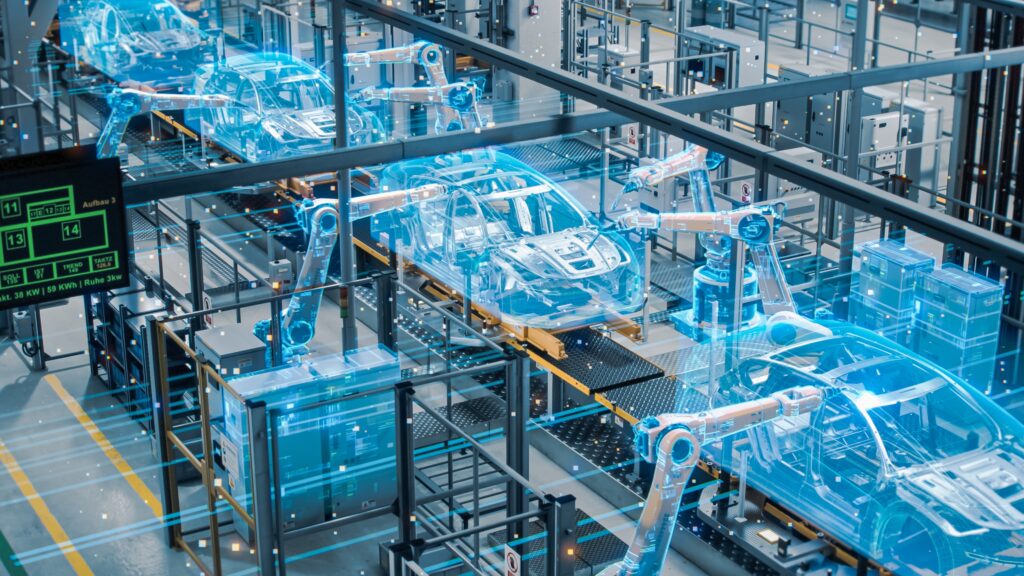
The Metalworking and fabrication industry is currently experiencing significant shifts, driven by technological advancements and evolving market demands. Industry 4.0 concepts, such as the Industrial Internet of Things (IIoT) and artificial intelligence, are leading to smarter factories. Machines communicate data, predictive maintenance prevents downtime, and AI optimizes production schedules. This data-driven approach promises greater efficiency and agility.
Additive manufacturing, or metal 3D printing, is becoming a powerful complement to traditional subtractive methods. It allows for the creation of incredibly complex geometries and lightweight parts that are difficult or impossible to make otherwise. While not replacing conventional techniques, 3D printing offers new design freedoms and rapid prototyping capabilities. The industry also faces challenges, including a persistent skills gap and the need for more sustainable manufacturing practices. Investing in workforce training and adopting energy-efficient processes are key for continued growth and competitiveness.